For the curious Arizona driver
Is ceramic window tint worth it in Arizona?
If you have seen a heat-lamp video or heard that ceramic tint costs more, the next question is what that upgrade would actually mean for your car, your comfort, and your budget.
By East Valley AutoWerks · Phoenix & the East Valley
The short answer
Ceramic tint can be a worthwhile comfort upgrade when the film’s actual performance fits your driving and the additional cost fits your budget.
Regular sun exposure can make solar control more valuable to you. If appearance is your only goal, your current tint already works well, or the higher price is uncomfortable, compare the alternatives before replacing or upgrading.
01 / Start here
Window film technology—not a coating on your paint.
Ceramic window tint is film applied to glass, with ceramic technology used in its construction. It is intended for solar control. Ceramic coating is a different service applied to vehicle surfaces for finish protection and easier care.
A film’s shade describes visible light transmission: how much visible light passes through. Its solar performance describes other properties. Compare the exact product and shade rather than treating “ceramic” or a dark appearance as a complete specification.
Comfort in direct sun
Solar-control film can reduce energy entering through treated glass. Your exposure, the windows treated, and the film you choose affect the experience.
Glare and appearance
Shade affects the amount of visible light entering. Balance the look you want with visibility, especially for night driving.
UV control
Ask for the UV specification of the exact film. UV rejection and total solar energy rejection describe different things.
02 / Beyond a heat-lamp demo
Buy for the way you drive.
A demonstration can help you feel a difference under its test conditions. Ask which films and shades were compared and what the display measures. An infrared rejection figure is not the same as total solar energy rejection, and neither is a promised percentage reduction in your car’s temperature.
For a real comparison, ask for shade-specific product data, the windows included, and the installed price. Tint helps manage solar gain; it does not actively cool the car like air conditioning.
Keep these expectations realistic.
- A parked car can still become hot after tinting.
- A darker shade is not a complete measure of heat performance.
- Ceramic technology does not remove the visibility tradeoff of dark tint.
- Factory privacy glass needs its own evaluation before adding film.
- Window tint is not rock-chip protection for paint or glass.
03 / Make it personal
Does the upgrade fit your priorities?
You do not need to choose a brand, shade, or package yet. Start with the improvement you want and what is already on your glass.
Your starting point
Three questions. A clearer next step.
Choose an answer to each question to see which conversation is most useful before buying.
General guidance, not a performance test or vehicle inspection. Your answers stay on this page and are not submitted.
04 / Understand the budget
Our ceramic sides-and-back options start at $450.
Our current menu includes a non-ceramic option and two ceramic lines. These are East Valley AutoWerks’ published sides-and-back prices, not a Phoenix market average. Confirm the final total and windows included for your vehicle.
High-performance alternative
CH Series
Sides & back
$350
A high-performance, non-ceramic alternative. Compare it when the initial budget is your main constraint.
Ask about CH SeriesCeramic option
GT Series
Sides & back
$450
Our carbon-ceramic option. Compare the performance of your preferred shade with the cost of stepping up from CH.
Ask about GT SeriesCeramic option
FS Series
Sides & back
$650
Our multilayer ceramic option. Compare its shade-specific performance with GT before deciding whether the additional cost fits your priorities.
Ask about FS SeriesWhat does the step up cost?
In the current sides-and-back menu, GT is $100 above CH, and FS is $200 above GT. Compare that additional cost with the exact shade’s performance and the improvement you want. A higher price alone does not tell you how large the difference will feel in your vehicle.
Old-film removal, additional glass, and any vehicle-specific work should be confirmed separately. Ask for the written warranty and care instructions. A warranty term is not a promise that every installation will look new indefinitely.
Explore our tint optionsShade, visibility, and Arizona requirements belong in the same conversation.
Arizona’s requirements vary by window location and consider the glass with the installed material. A film’s label alone does not confirm compliance on your car. Windshield placement has specific restrictions; discuss those and any applicable exceptions before installation.
If you drive at night often, say so before choosing a shade. Ask to evaluate the actual glass and a suitable compliant option rather than selecting only from a daytime photo.
Read Arizona’s official window-material requirements05 / Real East Valley AutoWerks work
See the appearance change.
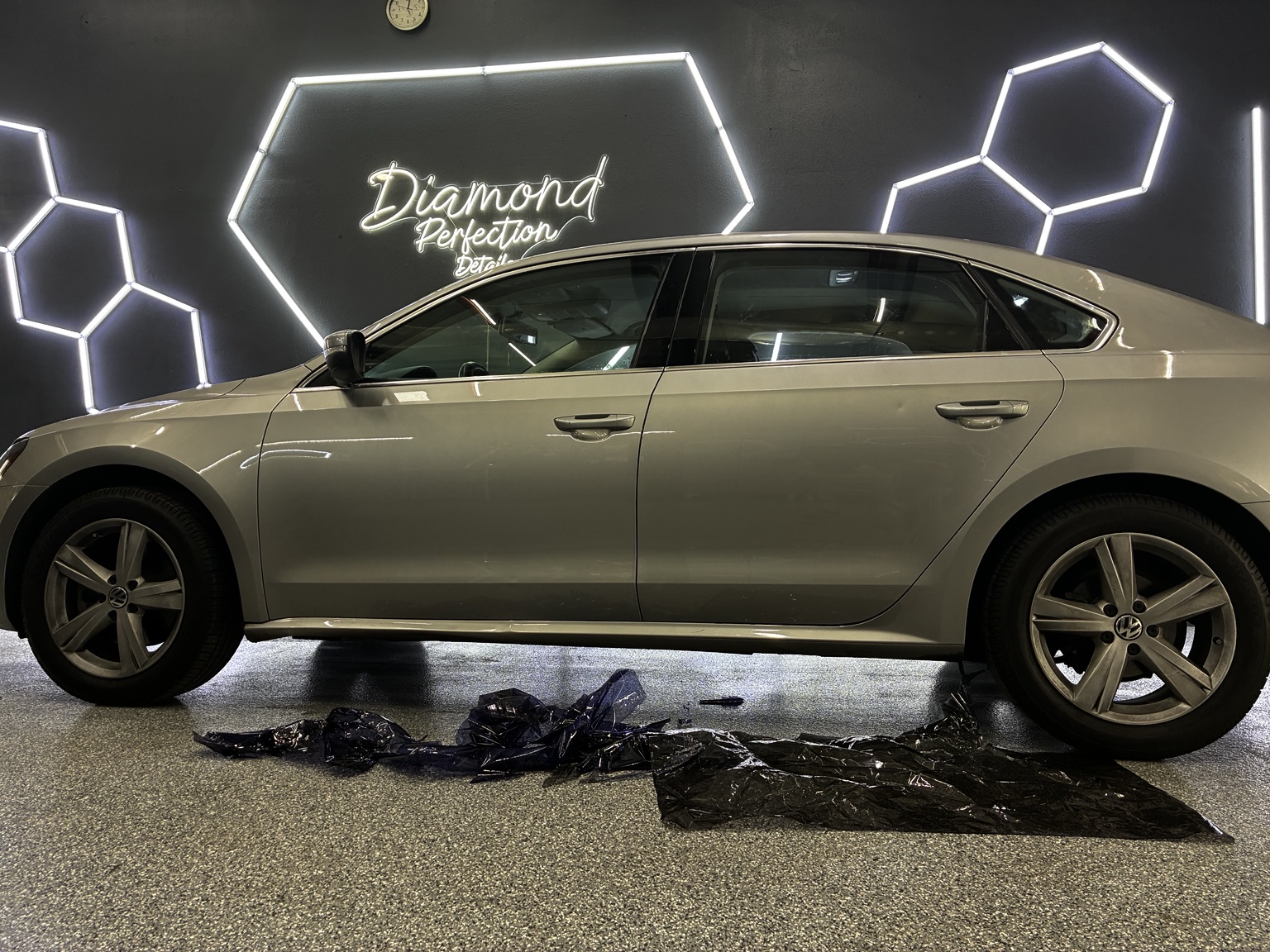
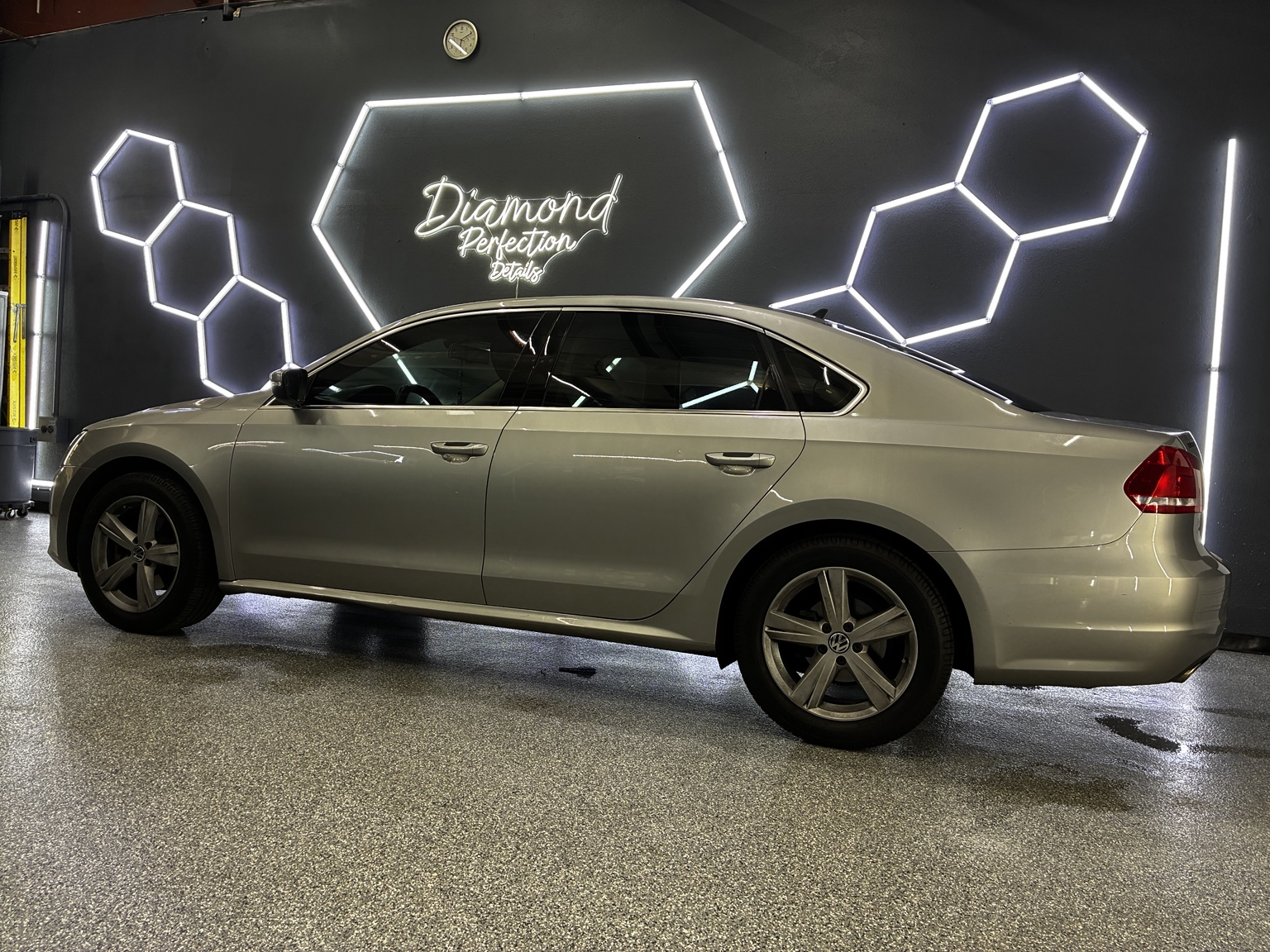
This Volkswagen is a real before-and-after installation example. Photos can show the finished appearance; they do not establish thermal performance, the exact shade, or visibility in every lighting condition.
Questions people ask before choosing tint.
East Valley AutoWerks / Phoenix & the East Valley
Start with the comfort problem you want to solve.
Tell us what you drive, what is on the glass now, and what bothers you most. We can compare film options, discuss shade and visibility, and confirm the right scope and price for your vehicle.