For the curious Arizona driver
Is PPF worth it
in Arizona?
Saw a video of scratches disappearing? Thinking about protecting a new car? Start here. Understand what paint protection film actually does before deciding what your vehicle needs.
By East Valley AutoWerks · Phoenix & the East Valley
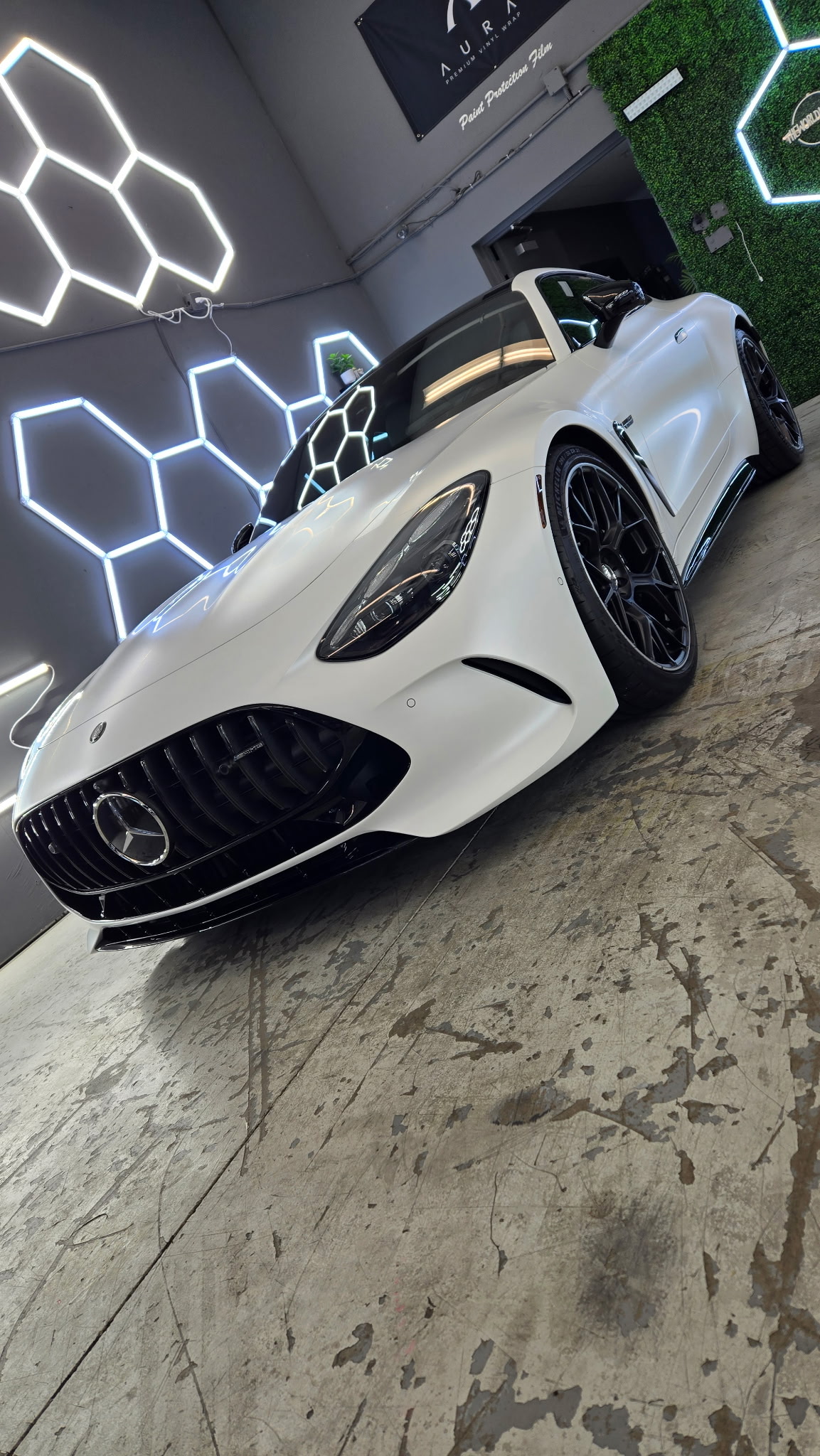
The short answer
PPF makes sense when keeping your paint in good condition matters enough to you to pay for a protective layer.
Frequent freeway driving, a finish you love, and plans to keep the car can strengthen the case. A tight budget, existing paint problems, or little concern about normal wear can point you toward less coverage—or none. It is a protection choice, not a guaranteed return at resale.
01 / Start here
A clear layer between the road and your paint.
PPF stands for paint protection film. You may also hear it called a “clear bra.” It is a physical film installed over painted panels to help reduce stone chips and surface abrasion. The film takes wear so the paint underneath has an extra layer of protection.
Clear PPF lets the original color show through. It is different from a liquid ceramic coating and from a vinyl color wrap. You can protect selected areas or more of the body; you do not have to wrap the whole car.
Your priority: reducing chips
Paint protection film
A physical, replaceable film over the paint. Coverage determines which panels receive protection.
ExploreYour priority: easier care
Ceramic coating
A surface treatment that helps with cleaning and water behavior. It does not provide the same impact barrier as PPF.
ExploreYour priority: a different look
Vinyl wrap
Primarily changes color or finish. Choose based on appearance goals rather than expecting the same chip protection as PPF.
ExploreWant a new color with film protection? Color PPF is another option.
Compare PPF and ceramic coating before choosing02 / Your everyday exposure
Think about how you drive in Arizona.
Freeways & road debris
If your routine includes I-10, Loop 202, or US 60, consider how much front-end exposure your car gets. Front coverage is a practical place to start the discussion.
Sun, dust & outdoor parking
Film still needs care. Dust should be washed off safely, contamination should be removed promptly, and prolonged outdoor exposure belongs in the maintenance conversation. PPF is not a substitute for shade or washing.
The panels you want to keep
A daily commuter and a weekend car may need different coverage. Look at your own mileage, where wear already appears, and how long you plan to keep the vehicle.
03 / Beyond the video
Self-healing is real.
It has limits.
Those demonstrations can show light marks relaxing in a film’s self-healing topcoat. They do not show paint repairing itself. Deep cuts, missing film, and damage underneath require a different solution.
Do not scratch your car or apply extreme heat to test it. Ask to see a demonstration on a separate sample and the care instructions for the actual film being installed.
Know this before you buy
- PPF can reduce damage; severe impacts can still reach paint.
- Film can be damaged and may need panel replacement.
- Edges and seams may be visible, especially with partial coverage.
- It does not repair existing paint damage or prevent dents.
- Warranty coverage and real-world service life are different things.
04 / Make it personal
Does PPF make sense for you?
Start with your driving, paint condition, and what you want to improve. You do not need to know film brands or package names yet.
Your starting point
Three questions. A clearer direction.
Choose an answer to each question to see which conversation is worth having first.
A general guide, not a quote or vehicle inspection. Your answers stay on this page and are not submitted.
05 / Coverage & cost
Protect the areas that matter to you.
A smaller package leaves more paint exposed but costs less. Full Front covers the entire hood and front fenders instead of leaving a film boundary partway across them. More coverage expands the protected area; it does not make the car indestructible.
Partial Front
Starting at
$900
Partial hood, partial front fender, and full front bumper — targeted high-impact coverage.
Full Front
Starting at
$1,700
Hood, bumper, fenders, and mirrors — complete front-end coverage.
Track Package
Starting at
$2,200
Full Front plus A-pillars, roof strip, and rocker panels — extended high-exposure coverage for spirited driving.
Full Body
Starting at
$4,700
Every painted panel — maximum protection for the entire vehicle.
Starting prices from our current coverage menu. Final pricing depends on your vehicle, paint condition, preparation, and agreed coverage. Confirm the exact film, panels, edge treatment, and written warranty with your quote.
See coverage on the PPF visualizerWhat makes it worth the price?
Compare the cost with how much you care about preserving the finish, your exposure to wear, and your ownership plans. Keeping original paint in better condition may matter to a future buyer, but there is no guaranteed resale premium or promise that PPF will pay for itself.
Ask the installer these questions.
- Which exact film will you install, and what does its warranty cover?
- Which panels and edges are included in my quote?
- Does my paint need any preparation or repair first?
- Can I see actual installations, including edges up close?
- How should I wash it, and who handles future film damage?
The questions people ask first.
East Valley AutoWerks / Phoenix, Arizona
You can start with a question.
Tell us what you drive, how you use it, and what you are curious about. We can look at the paint, explain coverage, and help you decide whether PPF fits your priorities.