Choose the panels, then the package.
Partial front, full front,
or full body PPF?
The difference is how much of the vehicle receives film. See where each package begins and ends, understand the tradeoffs, and choose coverage around the paint you want to preserve.
By East Valley AutoWerks · Phoenix & the East Valley
The short answer
Partial Front covers leading sections. Full Front covers complete front panels. Full Body expands protection across the painted body.
Track sits between Full Front and Full Body by adding A-pillars, a leading roof strip, and rocker panels. More area covered means fewer painted areas left outside the package. It does not make the film stronger or guarantee damage-free paint.
01 / See what changes
Switch the package. Follow the covered areas.
Choose a body style and a coverage level. Select a visible panel for more detail, then read the list alongside it. The list explains surfaces that the viewing angle cannot show.
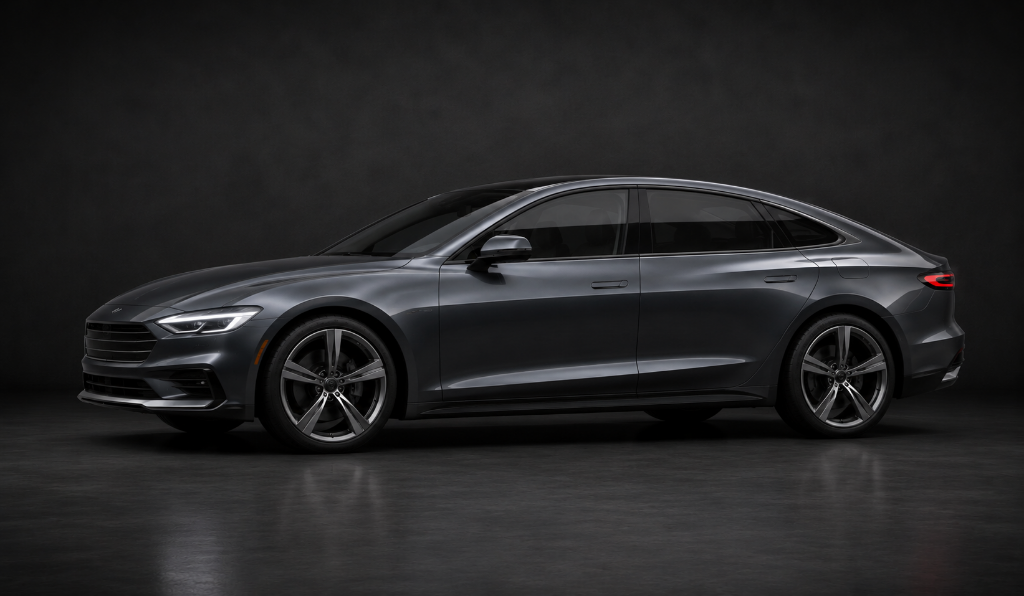
Gold shows the visible covered areas.
An illustration of coverage, not an exact installation pattern. This angle does not show every panel; use the coverage list and your written quote for the full scope.
Selected coverage
Full Front
Cover the complete front panels.
Starting at $1,700
- Full front bumper
- Entire hood
- Full front fenders
- Mirror caps
Where this package stops
The doors, rocker panels, roof, rear, and other areas beyond the listed front panels remain outside this package.
Compare this when your priority is front-end coverage and you want to avoid a film boundary partway across the hood and front fenders.
Starting price only. Exact scope and price are confirmed for your vehicle through consultation.
02 / Compare panel by panel
Package names need a coverage list.
These are East Valley AutoWerks’ package definitions. Other shops may use similar names for different coverage. Confirm the individual panels before comparing quotes.
Partial Front
- Front bumper
- Full
- Hood
- Leading section
- Front fenders
- Leading sections
- Mirror caps
- Not included
- A-pillars & leading roof strip
- Not included
- Rocker panels
- Not included
- Painted doors, remaining roof & rear body panels
- Not included
Full Front
- Front bumper
- Full
- Hood
- Entire panel
- Front fenders
- Entire panels
- Mirror caps
- Included
- A-pillars & leading roof strip
- Not included
- Rocker panels
- Not included
- Painted doors, remaining roof & rear body panels
- Not included
Track Package
- Front bumper
- Full
- Hood
- Entire panel
- Front fenders
- Entire panels
- Mirror caps
- Included
- A-pillars & leading roof strip
- Included
- Rocker panels
- Included
- Painted doors, remaining roof & rear body panels
- Not included
Full Body
- Front bumper
- Full
- Hood
- Entire panel
- Front fenders
- Entire panels
- Mirror caps
- Included
- A-pillars & leading roof strip
- Included
- Rocker panels
- Included
- Painted doors, remaining roof & rear body panels
- Included
Glass, wheels, lights, and unpainted trim are outside this painted-panel comparison. Vehicle-specific edges, seams, and any additional surfaces belong in your written quote.
03 / The important front-end difference
Does the film stop partway across the hood?
Partial Front leaves a film boundary across the hood and front fenders. That is an intentional coverage limit: paint beyond it remains exposed. The edge may be visible up close, so it is worth seeing a real example before choosing.
Full Front covers the entire hood and front fenders, avoiding a boundary partway across those panels. Film edges and seams can still exist elsewhere, depending on the vehicle and installation. Full Front does not mean that every edge is invisible.
Compare what the extra coverage buys.
In our menu, Partial Front starts at $900 and Full Front starts at $1,700—a starting-price difference of $800. Full Front expands the hood and front-fender coverage and adds mirror caps.
The decision is whether those additional areas fit your priorities and budget. A smaller package can still be a considered choice when you understand its limits.
Compare the starting prices04 / Start with your own priorities
Which coverage is worth comparing first?
A daily freeway commute
Compare Full Front with Partial Front. Decide whether protecting the entire hood and front fenders matters to you on the routes you regularly drive. Neither package covers the whole car.
A smaller protection budget
Start with Partial Front’s scope and limits. If the uncovered areas or partial-film boundary would bother you, compare the Full Front quote before committing—or wait until the preferred option fits your budget.
Concern about lower-side wear
Compare Track. Its rocker-panel coverage and additional leading areas address a different set of panels than Full Front alone. Ask whether those are the areas you actually want protected.
A finish you want preserved more broadly
Compare Full Body when the doors, rear, roof, and other painted areas matter to you too. A new or expensive vehicle does not automatically require it; your priorities and budget still decide.
Existing chips, repainting, or failing clear coat? Start with a paint inspection. Film is not paint repair, and the condition underneath may change the recommendation.
Confirm these details before installation.
- The individual panels and partial-coverage boundaries
- Which edges are wrapped and where seams may remain
- Paint condition, repair history, and preparation
- The exact film, written warranty, and final price
More film does not replace good preparation, installation, or care. Plan coverage around the areas you value, then agree on the details for your vehicle.
Coverage questions, answered.
East Valley AutoWerks / Phoenix, Arizona
Choose coverage for your vehicle.
Tell us what you drive and which areas you want protected. We will discuss the coverage, assess any preparation needs, and confirm the scope and price through consultation.